
Crystal Stone and Art – Company Profile
Founded: 2020
Industry: Gemstones, Minerals, and Crystals
Headquarters: — (Sukabumi Jawabarat - Indonesia )
About Us
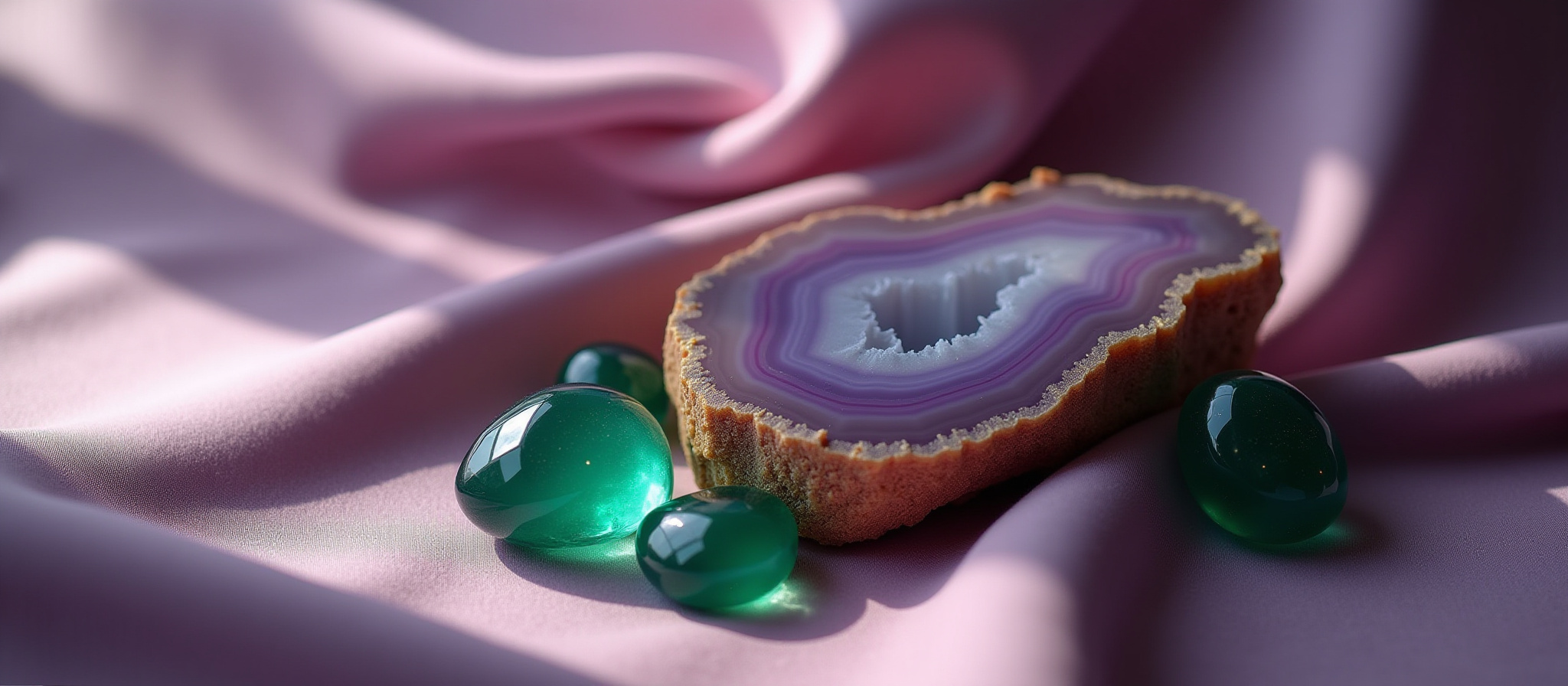
Crystal Stone and Art is a specialty brand dedicated to offering high-quality gemstones, minerals, and crystals for collectors, enthusiasts, healers, and interior décor lovers around the world. Since our establishment in 2020, we have grown into a trusted source for rare natural treasures, combining expertise, authenticity, and artistic presentation.
Our Story
Crystal Stone and Art was founded with a simple vision:
to bring the beauty and energy of the earth’s natural creations to people everywhere.
Starting as a small curated collection, we expanded by building strong relationships with miners, lapidary artists, and trusted suppliers across the globe. Quality, transparency, and passion have guided us from the beginning.
What We Offer
We focus on carefully selected natural products, including:
-
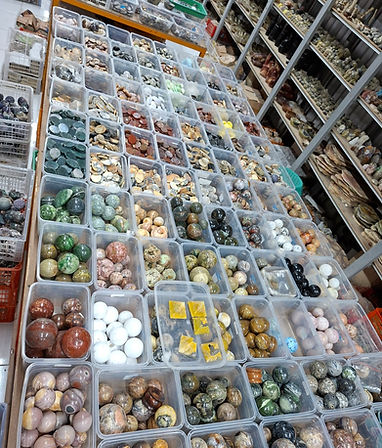
Raw and polished gemstones
-
Mineral specimens for collectors
-
High-vibration healing crystals
-
Decorative crystal pieces and sculptures
-
Jewelry-grade stones and accessories
Each piece is handpicked to ensure authenticity, beauty, and energetic value.
Our Values
Authenticity
Every gemstone and mineral is sourced responsibly and verified for its natural origin.
Quality Craftsmanship
We collaborate with experienced artisans to bring out the unique characteristics of each stone.
Customer Trust
We prioritize honest information, transparent sourcing, and excellent customer service.
Art & Nature Combined
Our pieces reflect nature’s raw beauty, enhanced through artistic design and presentation.
Mission
To provide genuine gemstones, minerals, and crystals that inspire, heal, and elevate the spaces and lives of our customers.
Vision
To become a leading global brand recognized for quality, artistry, and authenticity in the gemstone and crystal industry.
Why Choose Us
-
Trusted since 2020
-
Wide selection of rare and premium crystal specimens
-
Ethical and responsible sourcing
-
Expert knowledge and customer guidance
-
Personalized service for collectors, resellers, and interior designers

Articel Grape agate
Grape Agate: Formation, Characteristics, and Global Appeal
Introduction
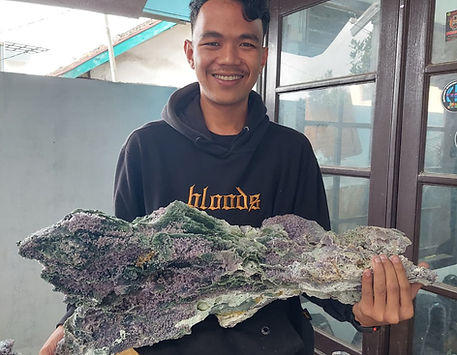
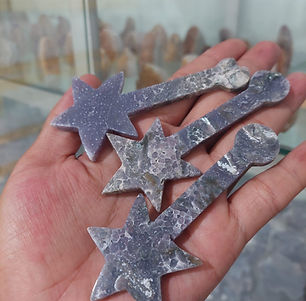
Grape agate is a unique and visually striking mineral that has gained international attention among collectors and gem enthusiasts. Known for its spherical “grape-like” formations and soothing purple to green hues, this mineral is both aesthetically beautiful and scientifically fascinating. Although often called agate, it is more accurately classified as botryoidal chalcedony, a microcrystalline variety of quartz.
Origins and Geological Formation
Grape agate forms through a slow geological process involving silica-rich fluids that deposit microscopic quartz crystals over extended periods. These crystals grow in tiny, rounded clusters, creating the characteristic botryoidal (grape-like) shape.
Key geological features:
-
Botryoidal growth: Spherical aggregates that resemble grapes.
-
Silica-rich environments: Typically found in cavities or fractures of volcanic rocks.
-
Long-term crystallization: The spheres form gradually from layers of microcrystalline quartz.
The most famous and abundant source of grape agate is Mamuju, West Sulawesi, Indonesia, which has produced some of the world’s finest specimens.
Physical and Optical Characteristics
Grape agate is admired for both its appearance and its durability.
Color Variations
-
Purple: The most iconic and sought-after color.
-
Green: Less common and often highly valued.
-
Blue, Grey, and Bi-color: Occasionally found and prized for rarity.
Structure and Hardness
-
Composition: Microcrystalline quartz (chalcedony).
-
Hardness: 6.5–7 on the Mohs scale, making it fairly durable.
-
Luster: Waxy to vitreous.
-
Transparency: Semi-translucent to translucent spheres.
Crystal Habit
Each sphere is typically 2–8 mm in diameter, though larger formations exist. Clusters often interlock to form natural sculptures, making each specimen visually unique.
Metaphysical and Aesthetic Appeal
Although not scientifically proven, many collectors attribute metaphysical properties to grape agate. It is often associated with:
-
Emotional healing
-
Inner peace and tranquility
-
Enhanced intuition
-
Creativity and calmness
Its soft colors and rounded shapes give it a soothing, almost meditative presence—one reason why it is popular in crystal therapy and interior décor.
Uses and Applications
1. Mineral Collecting
Due to its rarity and distinctive appearance, grape agate is highly valued among mineral collectors worldwide.
2. Jewelry
Some durable clusters are shaped into:
-
Pendants
-
Earrings
-
Cabochons
However, not all clusters are suitable for jewelry because the spherical formations can be fragile.
3. Decorative and Healing Objects
Polished specimens, display pieces, and metaphysical items are popular in the global crystal market.
Why Indonesian Grape Agate Stands Out
The grape agate from Sulawesi, Indonesia, is considered the finest due to:
-
Rich, vibrant purple and green colors
-
Perfectly spherical formations
-
High-quality transparency
-
Large and dense clusters
Since its discovery around 2016, Indonesian grape agate has become a major export mineral and a favorite among museums, collectors, and gem traders.
Conclusion
Grape agate is a remarkable mineral known for its botryoidal formations, vivid colors, and natural beauty. With its origins in volcanic environments and its worldwide popularity, it represents both the artistic and geological wonders of nature. Whether appreciated for its scientific value, its aesthetic charm, or its metaphysical symbolism, grape agate remains one of the most captivating minerals discovered in recent years.

Pyrite Deposits in Kalimantan, Indonesia: Geology, Potential, and Local Significance
Introduction
Pyrite, commonly known as “fool’s gold” due to its metallic luster and superficial resemblance to real gold, is a mineral composed of iron sulfide (FeS₂). Indonesia—particularly the island of Kalimantan—has long been recognized for its rich mineral resources, including coal, gold, and various sulfide minerals. Among these, pyrite plays a significant geological and economic role.
This article provides an overview of pyrite occurrences in Kalimantan, their geological settings, economic potential, and relevance to local communities.
Geological Setting of Pyrite in Kalimantan
Kalimantan (Indonesian Borneo) is part of the Sunda Shelf and is characterized by a complex geological history involving subduction zones, volcanic activity, and sedimentary basin formation. These processes have contributed to a diverse mineralization environment where pyrite is commonly found.
1. Association with Coal Deposits
Much of Kalimantan’s pyrite is found within coal-bearing formations, especially in East and South Kalimantan. Pyrite occurs as:
-
Disseminated crystals within coal seams
-
Nodules and lenses in shale layers
-
Fine-grained minerals in mudstone or sandstone
Its formation is often linked to the decomposition of organic matter in anoxic environments, which promotes the precipitation of iron sulfides.
2. Association with Gold and Sulfide Mineralization
In Central and West Kalimantan, pyrite is commonly associated with:
-
Epithermal gold deposits
-
Hydrothermal veins
-
Polymetallic sulfide systems containing chalcopyrite, galena, and sphalerite
In many gold mining regions, pyrite serves as an indicator mineral because gold often occurs as microscopic inclusions within pyrite grains.
Economic Potential
Although pyrite is not typically mined as a primary ore in Indonesia, it has several economic implications:
1. Indicator for Gold Exploration
Geologists often analyze the chemistry of pyrite to locate gold-bearing zones. Trace elements within pyrite—such as arsenic or antimony—can signal regions with higher gold potential.
2. Industrial Applications
Pyrite can be used for:
-
Sulfuric acid production
-
Iron extraction (in limited cases)
-
Semi-precious decorative stones and mineral specimens
However, in Kalimantan, the processing and commercial utilization of pyrite remain limited.
3. Environmental Considerations
Pyrite is a major contributor to acid mine drainage (AMD) when exposed to air and water. This process creates sulfuric acid, which can contaminate rivers and soils. In regions of Kalimantan where coal and gold mining are widespread, pyrite oxidation poses ongoing environmental challenges.
Local Significance and Mining Landscape
Kalimantan’s mining industry is an important source of employment and regional revenue. Pyrite, while not the main target, influences mining operations in several ways:
-
It affects coal quality, reducing its market value when sulfur content is high.
-
It requires special waste management to prevent acid drainage.
-
In artisanal gold mining areas, pyrite-bearing ores are often crushed to release fine gold particles.
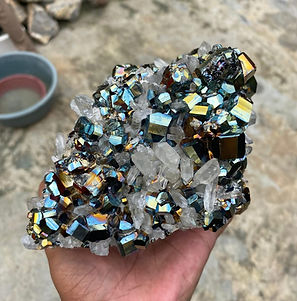
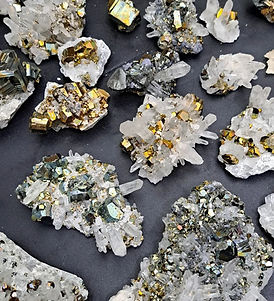
For mineral collectors, Kalimantan also produces aesthetically appealing pyrite crystals—cubic, pyritohedral, and sometimes massive forms—that are sold as specimens.
Conclusion
Pyrite in Kalimantan, Indonesia, is more than just a common sulfide mineral—it is a geological marker, a byproduct of coal and gold mining, and a material of scientific interest. While its direct economic use is limited, pyrite plays a critical role in mineral exploration and environmental management within the region.
With increasing attention to sustainable mining, understanding pyrite’s behavior in Kalimantan’s geological landscape is essential for balancing economic development with environmental protection.
My Product
.jpeg)

.jpeg)

.jpeg)
.jpeg)
.jpeg)



.jpeg)